Should You Consider Horse Insurance? What Every Owner Should Know
By Amy J. Daum for Marshall+Sterling, the Official Equine Insurance Partner of USPC
Let’s face it, insurance falls way to the bottom of the list of topics any horse owner wants to talk about. Discussing the various ways our horses can injure themselves or other worst-case scenarios doesn’t make for enjoyable barn aisle or ringside conversation.
Unfortunately, as in many areas of life, what you don’t know can hurt you. In the interest of helping you protect your horse and your bank account, or your parents’ bank account, especially in these tough economic times, let’s discuss whether horse insurance is a good option for you.
Accidents Happen
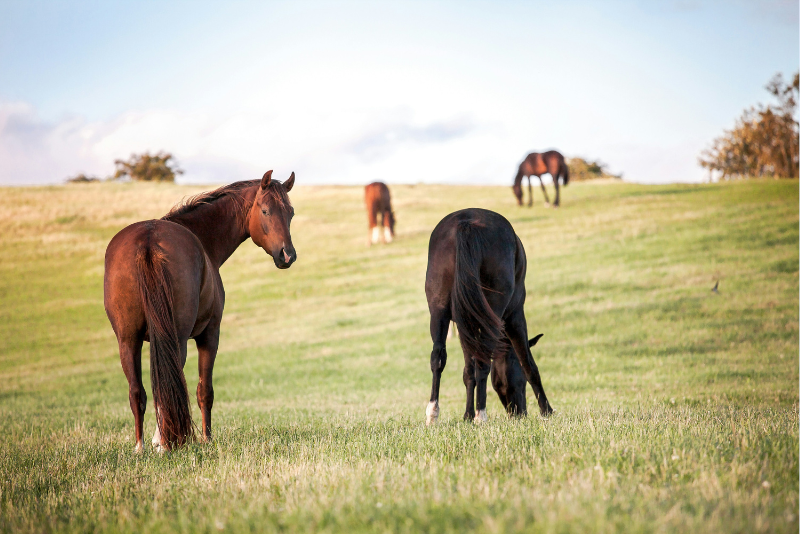
It’s a common misconception that horses are at most risk while competing. Several years ago, we analyzed more than 2,000 insured horses and found that pasture accidents were among the top causes of mortality claims over a two-year period. The types of accidents ran the gamut from kick wounds from another horse, to falls, puncture wounds and being injured on pieces of fencing or trees. And these types of accidents don’t discriminate by value or type of horse. Uses of horses in the study ranged from Olympic contenders to backyard pleasure horses, and insured values were everywhere from $5,000 to $250,000.
What You Can Do
First, take steps to limit your horse’s risk while he is turned out. Monitor fence lines, and keep all debris out of pastures, paddocks, and dry lots. Introduce new horses to a herd gradually, and if you see personality conflicts cropping up among the herd or even good “friends” consistently playing too enthusiastically, take steps to separate these horses for their own good. In addition, keep an eye on the weather and avoid putting your horses out in slippery conditions on ice or mud. It seems like every winter we see at least one mortality claim come through after a horse slips and falls in icy and/or muddy conditions.
Second, consider insuring your horse. Horse insurance is often more affordable than many owners expect, but how much equine insurance costs can vary widely depending on your horse, discipline, and the level of protection you choose.
For example, as a general reference point, for most uses and disciplines, insuring a $10,000 horse typically costs between $280 and $390 per year for mortality coverage (horse life insurance), with higher rates for certain disciplines/levels. That mortality policy also typically includes up to $5,000 in free emergency colic surgery coverage (depending on the horse’s insured value and the carrier offering coverage). In addition, as a general reference point, medical and surgical protection can be added to the policy starting around $250 annually for a $5,000 limit, with $7,500, $10,000 and $15,000 limits available starting at $425 a year.

Colic: Much More than a Stomachache
There is a reason that the word “colic” strikes fear in the heart of every horse owner. Our previously mentioned analysis of insured horses identified colic and related intestinal issues as the second-leading cause of mortality claims, behind pasture accidents.
Again, we see claims related to colic across the spectrum of horses, regardless of breed, discipline, or value. Horses receiving the best feed, hay, pasture, training, and veterinary care, plus extensive monitoring can still end up needing surgery at the nearest veterinary hospital. While the prognosis has become increasingly positive over the years, an unfortunate number of horses still pass away before, during, and after surgery for various reasons.
In some cases, colic comes on suddenly during the night, and the horse is gone by morning. In other cases, even with prompt care and attention, by the time the horse makes it to the hospital, too much damage is done. And in others, post-operative complications develop that the horse cannot overcome.
Colic Prevention
Colic prevention is a bit of an art and science and often seems to be a matter of luck. In a nutshell, allow your horse to live as much like a horse as possible. Constant access to clean water year-round is imperative. Give your horses as much time as possible on quality pasture, as their digestive systems are designed to have an almost constant influx of roughage. For those that have little access to grass, have good-quality hay available throughout the day and night, and if the horse is on grain, then feed several small meals daily if possible.
Also, be aware of the possibility of gastric ulcers, which can lead to colic issues. Ulcers are much more prevalent across all breeds and disciplines than previously thought. Even just a two-day trip away from home can be enough to increase the chance of ulcers. If your horse is dropping weight for no reason, seems unusually tense or depressed, has changed his eating or drinking habits and/or often seems just slightly “off” or mildly colicky, talk to your veterinarian. The good news is that effective prevention and treatment options exist to keep ulcers at bay.
Other Causes for a Mortality Insurance Claim
Neurological diseases such as equine protozoal myeloencephalitis (EPM) and equine wobblers syndrome, aka cervical vertebral compressive myelopathy (CVCM), were slightly more prevalent than other causes when we analyzed mortality claims. And the remainder of causes were extensive—from eye conditions, carcinoma, and laminitis, to catastrophic injuries from trailering accidents or barn fires.
Other Expenses: Major Medical/Surgical
In many cases, before these horses passed, their owners spent thousands of dollars on diagnosis and treatment. In those cases, the clients that also had medical/surgical coverage on their policy were often reimbursed for the bulk of their veterinary expenses.
For non-fatal emergencies that still result in steep veterinary bills, major medical and surgical coverage proves invaluable.
Final Thoughts
No one wants to imagine their horse facing a serious accident or illness, but unfortunately, these situations are part of horse ownership regardless of breed, discipline, and how carefully a horse is cared for. That unpredictability is exactly why so many owners choose to plan ahead with equine insurance.
Putting into perspective all the time, dollars, and effort we put into our horses, and the fact that we insure our other major investments, such as trucks and trailers and houses and farms, adding your horse to that list is worth considering. As USPC’s Official Equine Insurance Partner, at Marshall+Sterling, we’re happy to email a Horse Insurance quote or prepare one over the phone at (888) 687-8555 whenever you are ready.
About Marshall+Sterling, USPC’s Official Equine Insurance Partner

Marshall+Sterling Insurance is dedicated to protecting horses, riders, and owners across all disciplines at every level of horse sport. Our Equine Insurance division offers a wide range of coverage, including Mortality, Major Medical and Surgical, as well as Personal and Commercial Equine Liability, along with Farm and Ranch packages, empowering customers to predict, prepare for, and preempt risk—creating a future that’s safer and more secure. Founded in 1864, we also provide business and personal insurance, including home and auto, employee benefits, and wealth management solutions.

Amy Daum
A lifelong equestrian starting out in 4-H and then moving on to show hunters, eventing, and dressage, Amy J. Daum has three decades of experience in the equine insurance industry, including seven years as a member of the United States Eventing Association (USEA) staff. A founding partner of Broadstone Equine Insurance Agency, she joined Marshall+Sterling in 2019 when the agency acquired Broadstone and has since served as Marshall+Sterling's Vice President of Equine Operations. Marshall+Sterling Insurance is dedicated to protecting horses, riders, and owners across all disciplines at every level of horse sport. Our Equine Insurance division offers a wide range of coverage, including Mortality, Major Medical and Surgical, as well as Personal and Commercial Equine Liability, along with Farm and Ranch packages, empowering customers to predict, prepare for, and preempt risk—creating a future that’s safer and more secure. Founded in 1864, we also provide business and personal insurance, including home and auto, employee benefits, and wealth management solutions.


You May Also Like

Equine Sedation: A Comprehensive Guide for Horse Owners
Health Partnerships for Happy Horses