
Pasture Perils
By Dr. Clair Thunes M.S., Ph.D., PAS for Triple Crown Nutrition, the Official Feed Sponsor of USPC
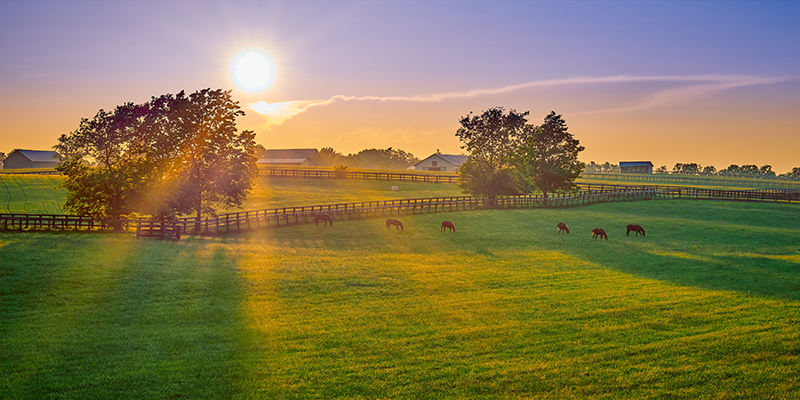
Most people think luscious, green pastures are the most wonderful sight when gazing on a horse farm. After all, good-quality pasture grass is an excellent source of quality protein, vitamins, minerals, and other nutrients for our horses and ponies. But for some, pasture grass creates weight management challenges and may trigger painful health conditions that, in some cases, can be deadly.
All grass is made up of high levels of carbohydrates, but spring pasture grasses can be especially high in starch and sugars—glucose, fructose, and sucrose—known collectively as nonstructural carbohydrates (NSC). These carbohydrates, which are rapidly digested and absorbed for a quick release of energy, can trigger painful health conditions for some horses, and they also provide an abundant source of calories that can result in undesirable weight gain and possible obesity.
[For those wondering what structural carbohydrates are, these are fiber components of the plants our horses eat—cellulose, hemicellulose, and lignin—that may be fermented slowly in the hindgut by bacteria for sustained energy.]
The Trouble With High NSC
Most NSC is digested in the small intestine and enters the bloodstream as glucose. To regulate the amount of glucose in the blood, the body releases insulin to stimulate the uptake of glucose into muscle cells. Once in the muscle, glucose is stored as glycogen for later use during exercise. This process is very beneficial, except for horses that struggle with Type 1 polysaccharide storage myopathy (PSSM1) or whose insulin production or sensitivity does not function properly (insulin dysregulation).
PSSM1
In the case of PSSM1, these horses have a genetic mutation that affects the way they make and store glycogen so that they aren’t able to use it properly for exercise. What results is a painful muscle condition like muscle cramping, known as tying-up.
Often triggered by the onset of work, this muscle cramping makes it hard for the horse to move. In severe cases, the muscle damage that results causes a protein to be released that is toxic to the horse’s kidneys and may lead to kidney failure. The protein turns the horse’s urine dark brown or rust color. All incidences of tying-up require veterinary care, but the discolored urine signifies a very serious condition that requires immediate emergency veterinary care.
PSSM1 tends to be found predominantly in draft breeds, such as Belgian drafts and Percherons, as well stock breeds, such as Quarter Horses, Appaloosas, and Paints, but it can be found in a wide range of breeds. It is important to note that not all incidents of tying-up are due to PSSM1. Sometimes tying-up results from being worked too hard for the horse’s level of fitness or because of dehydration and poor electrolyte balance. However, these causes tend to be one-off episodes where horses with PSSM type 1 will generally tie-up more than once.
Insulin Dysregulation
For horses and ponies with insulin dysregulation, their cells may not be as sensitive to insulin as they should be, which causes the body to secrete more insulin. Over time, these horses may always have higher-than-normal insulin levels that rise even further in response to a meal high in NSCs. Unfortunately, having elevated insulin levels can trigger laminitis, a potentially fatal condition involving the horse’s feet. Most laminitis cases seen in the field by treating veterinarians are in fact caused by these endocrinopathic (hormonal) issues rather than other causes.
Laminitis
Advanced laminitis is easy to spot by the unusual stance that the horse or pony adopts to help take pressure away from their toes. They stand in a “sawhorse” posture with their front feet further forward than normal in order to transfer weight towards the heel of the hoof. However, by the time this posture is noticeable, significant changes have already occurred due to inflammation and the mechanical forces inside the hoof. Like tying-up, laminitis is a veterinary emergency. Left untreated, the coffin bone within the horse’s hoof capsule may rotate (a condition known as founder) and ultimately penetrate through the bottom of the hoof.
Early signs of laminitis to watch for include hooves that feel hot to the touch and a pounding digital pulse in the fetlock or pastern area. Laminitis is very painful, and the horse may be hesitant to move or he may walk with shortened strides or even lie down and refuse to get up.
Equine Metabolic Syndrome
Horses and ponies who have had at least one bout of laminitis, have elevated insulin values, and are also overweight are diagnosed as having equine metabolic syndrome (EMS). Ponies are especially prone to having dysregulated insulin production and developing EMS and therefore need particularly careful management if given access to pasture. Breeds with higher risk for EMS are those typically considered to be “easy keepers,” such as Welsh Ponies, Morgans, Mustangs, Gypsy Vanners, Haflingers, and Arabians.

Diagnosis and Management
Your veterinarian can test for both insulin dysregulation and PSSM1. A simple genetic hair test is available for PSSM1, and blood work can be used to diagnose insulin dysregulation.
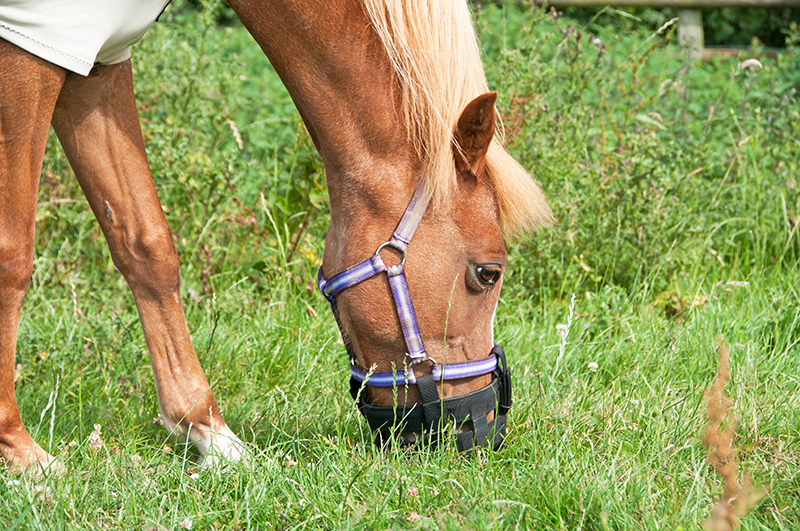
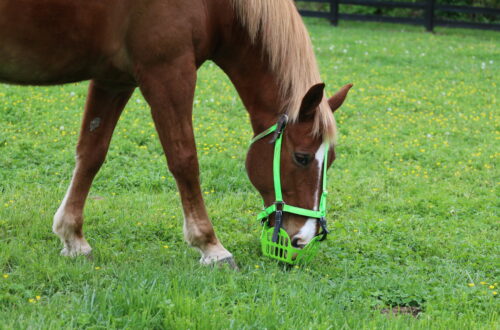
Horses with these conditions need to be managed very carefully if given access to spring pasture. Turnout and the ability to move around is very beneficial for horses with PSSM type 1, and similarly, movement is very helpful for weight management when managing EMS. The key is to limit NSC intake, and the best way to do this is by using a grazing muzzle and turning out in the morning before NSC levels build up in the grass.
Many horse owners are tempted to skip using grazing muzzles because they feel sorry for their horse. However, anyone who has nursed a horse through laminitis knows the pain of the alternative! Fitted correctly to a breakaway halter, using a grazing muzzle has been shown to reduce pasture intake by almost 85%.
You will want to limit turnout to the early morning hours when sugar levels are at their lowest—grass uses stored carbohydrate made the day before for overnight growth, unless the overnight temperature falls below about 40°F, which prevents growth and leaves stored sugar levels high. As a rule, NSC-sensitive horses should not graze after cold overnight temperatures.
Ultimately, horses at high risk for laminitis should not have any access to pasture grazing. In these situations, drylot turnouts and track grazing systems, which are developed to allow an area where a horse exercises around an area for grazing, prove to be very beneficial ways of providing movement opportunities without access to potentially hazardous high-NSC pasture.
Managing Pastures
One common mistake when managing horses and ponies with these conditions is believing that because the grass is very short, they are not at risk. Cold-season grasses, such as timothy, orchardgrass, and fescue, that have been grazed to a height of less than 3 inches will be stressed, and stressed grasses tend to be higher in NSC—sometimes significantly higher.
In pastures where there are areas of long and short grass, horses will prefer to eat the shorter grass because it is sweeter. Managing pastures to ensure even grazing (consider mowing very long grass), removing manure or harrowing (horses will not eat where there are feces), and resting pastures once grass height reaches 4 inches will improve pasture quality and result in grass that is less stressed.
Monitor Body Condition
Whether the horses and ponies in your care are at risk of these conditions or not, pay careful attention to body condition as spring progresses. Obesity has multiple negative health consequences. Familiarize yourself with how to body condition score your horse, and use a weight tape at least once a month. Learning how to use these tools can be a fun educational activity for Pony Club meetings.
More information on managing pastures, PSSM type 1, and laminitis can be found in the advanced-level edition of the USPC Manual of Horsemanship.
While pasture offers many health benefits, it is always important to treat each horse as an individual. It may be that for your horse or pony, the negative health consequences of being on pasture will outweigh any potential benefit. If you have concerns about whether pasture grazing is safe for your horse, consult your veterinarian.
Need more help with your horse’s nutrition? Contact a Triple Crown Feed expert at www.triplecrownfeed.com or call 800-451-9916 for personalized advice.
About Triple Crown Nutrition — Official USPC Feed Sponsor
Triple Crown offers premium equine feeds that provide the exact nutrition your horse needs, designed to help support immunity and gut health. Learn more at TripleCrownFeed.com.
This article was originally published in the Spring 2025 issue of Discover USPC magazine. Read more content from that issue.

USPC National Office
The United States Pony Clubs, Inc. (USPC or Pony Club) is the largest equestrian educational organization in North America. Started in 1954, the organization has developed curriculum that teaches safe riding skills and the care of horses through mounted and unmounted lessons. Through Pony Club, members have fun with horses and make lifelong friends while they develop skills, habits, and values that extend well beyond the barn and last a lifetime. Many members apply what they have learned in the USPC program successfully in their careers, educational and volunteer opportunities, and other life pursuits.


You May Also Like
Can You Recognize If Your Horse is in Pain?
Feeding Recommendations for Metabolic Conditions
