
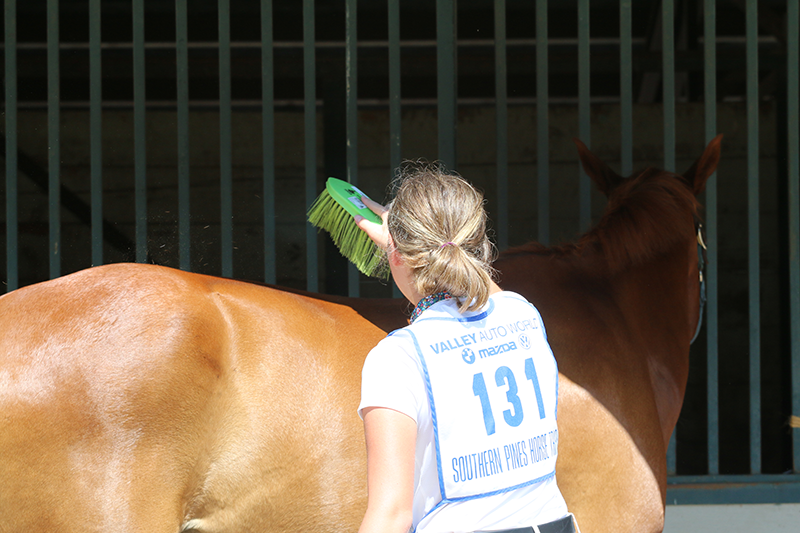
Brush Up on Bonding
By Liv Gude, Brought to you by Shapely’s Grooming Products, the Official Grooming Product Sponsor of USPC
Grooming isn’t just for getting your horse clean and for keeping his skin, coat, and hooves healthy. It is also a bonding experience with your horse that can strengthen your relationship in and out of the saddle. The groundwork and handling that happens during grooming and bathing allows you to see and feel your horse’s body language and react to create the most positive experience possible. Grooming helps to improve the unspoken communication between you and your horse. With the tips below, you can turn grooming time into a treat for your horse.
Proper Grooming Techniques
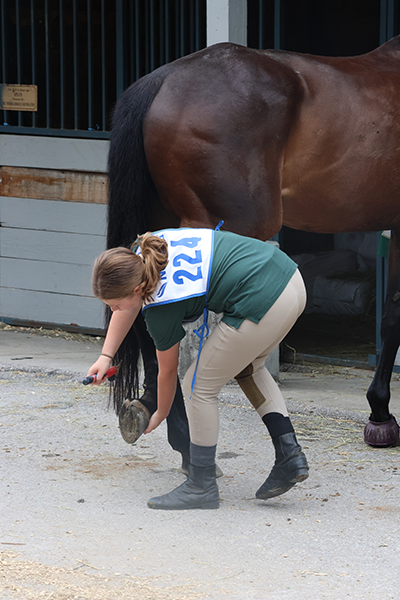
There are two things to consider when picking hooves, bathing, and grooming your horse. The first is effective cleaning. Is the coat dust-free and shiny? Are the hooves free of manure, footing, dirt, and rocks?
The second is how your horse feels while you groom. Some horses are more sensitive than others and may object to handling for a variety of reasons. What might seem like a simple brushing to you can be an overwhelming or uncomfortable experience for them. In addition, negative experiences during grooming or bathing are not soon forgotten, and the damage done there can seep into your riding.
Red Flags
Every horse will have slightly different ways of expressing themselves to you. Look for these signs of irritation, discomfort, and fear:
- Pinned ears
- Snapping at the cross-ties
- Backing up, stepping forward, or moving sideways to avoid you
- Swishing or wringing their tail
- Quickly shifting weight from leg to leg
- Flared nostrils
- Stomping
- Kicking out
- Head tossing
- A hard, wide eye
- Flared or crinkled nostrils
Any of these indications require you to figure out what the horse is saying and what caused this reaction. For example, a horse that steps away when the dandy brush comes close may find the bristles too hard or ticklish. Swishing their tail when you curry their belly may mean you are not using enough pressure, or too much.
When a horse dislikes grooming or feels discomfort or pain during grooming, he can develop some problematic behaviors.
Dangerous Body Language: If a horse hates grooming, he may become defensive, especially when he is tied. Without an escape, he may resort to pawing, stomping, tail swishing, and other defensive postures. The behaviors can evolve into kicking, rearing, or other dangerous situations.
Learned Helplessness: Horses may move beyond fight or flight into freeze mode. The fight or flight reflex helps horses escape or stand their ground against dangers. Freezing is when a horse mentally shuts down and may get tense or more rigid in place. This behavior is learned helplessness, and it happens when they can’t fight or flee.
Breaking Trust: Uncomfortable experiences will damage the relationship with your horse. He will see you as the instigator of pain who dismisses his communications. This distrust carries into any riding and handling that you do.
It’s always good to err on the side of caution if you notice your horse behaving differently as you groom or showing signs of discomfort. Could he be in pain? Is he in an awkward position or a new location? Are you trying a new brush that he doesn’t like? If he is reacting abnormally for him, talk to your vet to rule out any physical ailments that could be causing any unusual behavior.
If your vet has ruled out health problems, it’s time to experiment with different grooming techniques.
Signs We Like
You can tell you are on the right track with your grooming sessions when you see positive signs that it feels good to your horse. Look for these visual cues:
- Sleepy and soft eyes
- Relaxed nostrils
- Dropped neck
- Resting with one hind leg shifted
- Chewing or licking
- Soft breaths, maybe even sighing
- Floppy ears
- Lip wiggling and leaning into your grooming tools when you find the “good spot”
Better Grooming
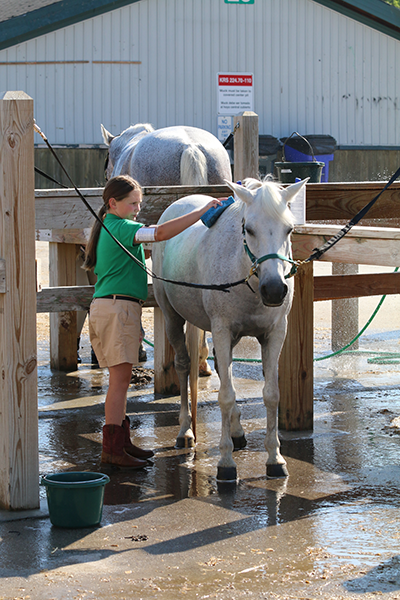
Find the brushes your horse likes, which may vary from one body part to another. He may love an extra-stiff brush on his rump but want the softest possible brush for his belly.
Switch to different bristles and curry combs to find the best combinations. More prominent, plastic bristles on hard brushes can equal the brushing power of the softer, longer bristles of a flicker brush. Both do the same thing but offer different sensations.
You’ll want to find the best flexibility and the perfect bristles that your horse loves for curry combs. Try a thin, wobbly curry comb with extended nubs or a stiffer curry with tiny, soft nubs.
You also must find the ideal pressure that your horse likes for the tools you have at hand. Finding good brushes is one part of the equation. However, you don’t have to buy every brush at the tack shop. Instead, find the tools your horse most prefers and then change how you use them. Add more pressure or use less pressure to see how your horse reacts. Your horse might love lots of pressure around the withers but a light touch down the legs. Now, you can develop a grooming map of the best tools and techniques.
A Good Grooming Environment
Horses are intuitive and can turn stress you are feeling, and transmitting, into their stress. Focus instead on making grooming a time to rest and enjoy being together. As his trust in you grows, your horse will mimic your relaxation if you make grooming a calm, quiet, and pleasant experience.
Here are some things to consider for your grooming environment:
Noise Level: Music, yelling, and other loud noises can create tense horses. Be mindful of the noises around you and adjust volumes so you can both relax.
Footing: It can be irritating for some horses to stand on hard ground. Find a nice area with mats or softer footing.
Hot or Cold Conditions: Is your horse cold? Use coolers if you think your horse is chilly as you groom. You can peel away sections to brush, then cover him up again. If your horse is standing in the hot sun, consider moving to an area with shade.
Product Application Methods: If your horse doesn’t like spray bottles, use a cloth or soft glove to apply these grooming or fly-control products instead of spraying them directly onto the horse.
Also, talk to your horse while you are grooming. Quiet words and kind touches help reinforce relaxation. You don’t need any reason to have a nice conversation with your horse, and you can talk about anything!
There are many ways you can make grooming something to look forward to for your horse. When you find something your horse loves—like a special scratchy spot, a favorite treat, or even some petting and quiet time—do that in your grooming area. The goal is to teach your horse that grooming is pleasant and positive and not something to be anxious about.
Plan for Positive Grooming
Be mindful of your horse’s age and training. A horse’s past interactions, or lack thereof, will dictate how they tolerate grooming. Consider this as you work on a positive grooming plan.
Young horses need positive reinforcement during handling. When they stand nicely, lead quietly, and don’t fuss, they deserve a reward. You can train them to be less fidgety and strengthen your relationship at the same time.
Rescue horses may need you to work with a trainer who specializes in building trust. Grooming sessions may be in a round pen where your horse can move away if stressed or stand with you to enjoy a little brushing. Take your time.
Senior or injured horses might find hoof picking difficult. Honor this by picking hooves when they are warmed up and releasing their hoof instead of fighting for them to hold it up. Also, their joints or previous injuries may need different brushes and softer grooming pressure.
Sport horses may find grooming unpleasant if they have sore muscles. Notice flinching or new grooming responses and adjust their care and riding routines to avoid discomfort.
Grooming isn’t just cleaning your horse; it’s listening to him and responding with kindness. Let your grooming time become the best time you have with your equine companion.
This article was originally published in the 2025 Spring issue of Discover USPC magazine. Read more content from that issue.
About Shapley’s — Official USPC Grooming Product Sponsor
Shapley’s has been producing superior equine grooming products for over 85 years, and top riders and horsemen trust Shapley’s for their horse’s health and shine. Learn more at Shapleys.com

USPC National Office
The United States Pony Clubs, Inc. (USPC or Pony Club) is the largest equestrian educational organization in North America. Started in 1954, the organization has developed curriculum that teaches safe riding skills and the care of horses through mounted and unmounted lessons. Through Pony Club, members have fun with horses and make lifelong friends while they develop skills, habits, and values that extend well beyond the barn and last a lifetime. Many members apply what they have learned in the USPC program successfully in their careers, educational and volunteer opportunities, and other life pursuits.


You May Also Like

Creating a Comprehensive Care Plan for Your Horse
New World Screwworm Confirmed in Texas and New Mexico Horses