
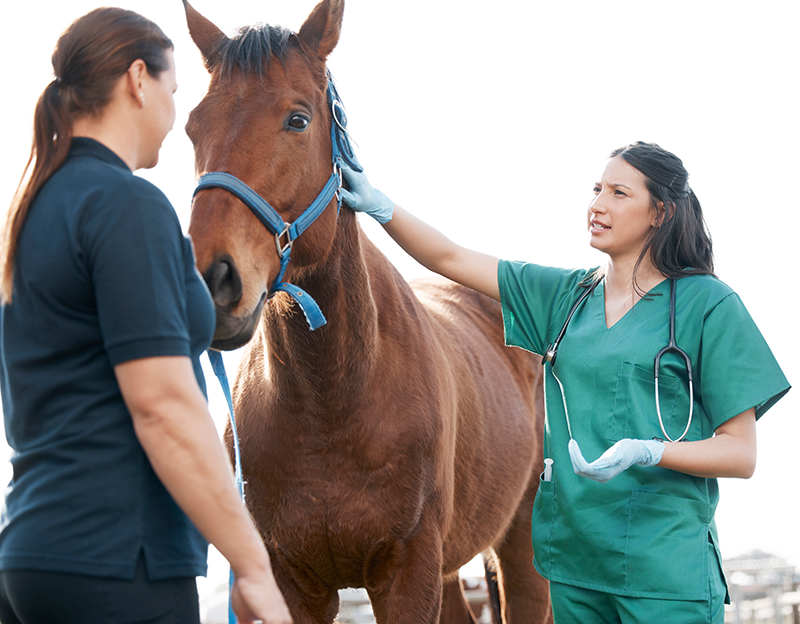
Health Partnerships for Happy Horses
By Virginia Knox, DVM, Hagyard Equine Medical Institute
Establishing a good relationship with your veterinarian is an integral part of maintaining your horse’s health and well-being. These relationships are built on mutual respect, trust, and solid communication, and have healthy boundaries and share common goals. This can help ensure your horse receives care in a timely manner, especially when an emergency arises.
Establish Care with a Veterinarian
Do not wait for an emergency! It’s best to establish care with a local equine practice as soon as possible. It can simply start with preventive, routine care that is done once to twice a year. This is a great opportunity to get to know your veterinarian and ask any questions you may have. This allows your veterinarian to also understand specific needs for you and your horse and establish common goals. By receiving regular preventive care, it can help prevent possible emergencies from occurring, save you money in the long run, and keep your horse as healthy as possible. And if an emergency does arise, since you will have established care at a particular veterinary practice, then that veterinarian will be better equipped to assist you when you need it most.
Prepare for Appointments
It’s important to plan ahead and be prepared for your horse’s appointments. This allows you and your veterinarian to maximize your time spent together. Here are things to consider prior to your appointment:
- Arrive to the barn early, and have your horse in the barn, clean and with a halter on.
- If you are going to be late, notify your vet immediately.
- Arrange for an additional helper, if necessary.
- Have a space available that is safe to work in for you, your horse, and the veterinarian.
- Ensure you can provide all necessary information right then (e.g, address for a health certificate, etc.).
- Have previous medical records available in case they are needed.
- If you would like to add additional services, let the veterinarian know as soon as possible before the appointment. Your busy veterinarian might not have time to add on services if this isn’t planned ahead of time.
- Improve your horse’s training beforehand so that he can be safely handled and will comply with health-care professionals.
- Share any behavior quirks that your horse has to keep everyone safe (for example, if he is nervous of needles, etc.)
A Healthy, Professional Relationship
- When forming a relationship with your veterinarian, ask the best way to reach them during and after regular business hours. Most veterinary practices have protocols for emergencies. Is there an emergency line, or do they use an affiliated equine practice for after-hours calls?
- If you do have a veterinarian’s cell number, be mindful of the time of day you contact them, and only contact them during regular business hours, unless otherwise instructed to do so. Before contacting your vet after hours, always ask yourself, “Is this truly an emergency, or can it wait until the next day?”
- Be respectful of possible delays. Sometimes a veterinarian’s day doesn’t always go according to plan. They may need to push back a routine appointment at the last minute due to an emergency.
- Also, remain current on bills! This allows your veterinarian to continue providing services to your area.
- Remember to be flexible. Scheduling can be challenging, and your flexibility can help your horse be seen in a timely manner.
Emergencies
- If you have a true emergency, don’t delay. Do not wait for a small problem to become a bigger issue.
- During your horse’s preventive wellness exam, this is a great time to discuss emergency supplies to have on hand. Your vet can prescribe any medications needed for an emergency situation.
- Have a budget and a plan for emergencies. Keep in mind what your finances allow. Do you have a truck and trailer available? Is referral to a hospital an option? This not only helps your horse, but also your veterinarian, as you make decisions on treatment plans.
- Remember, lack of preparation on your end does not constitute an emergency. For example, needing a last-minute health certificate, vaccination, or Coggins is not a true emergency! Plan ahead to avoid situations like this. This helps to maintain a good relationship with your veterinarian.
Forming a relationship with a veterinarian is paramount for you and your horse. Establishing this relationship early on before an emergency arises is advantageous for everyone involved, including our four-legged friends. Being respectful, flexible, and prepared goes a long way and can make a world of a difference for your veterinarian.
This article was originally published in the 2025 Spring issue of Discover USPC magazine. Read more content from that issue.

USPC National Office
The United States Pony Clubs, Inc. (USPC or Pony Club) is the largest equestrian educational organization in North America. Started in 1954, the organization has developed curriculum that teaches safe riding skills and the care of horses through mounted and unmounted lessons. Through Pony Club, members have fun with horses and make lifelong friends while they develop skills, habits, and values that extend well beyond the barn and last a lifetime. Many members apply what they have learned in the USPC program successfully in their careers, educational and volunteer opportunities, and other life pursuits.


You May Also Like

Creating a Comprehensive Care Plan for Your Horse

Shiny Horse Secrets
