The Gleaming Gray Horse
By Liv Gude, Brought to you by Shapely’s Grooming Products, the Official Grooming Product Sponsor of USPC
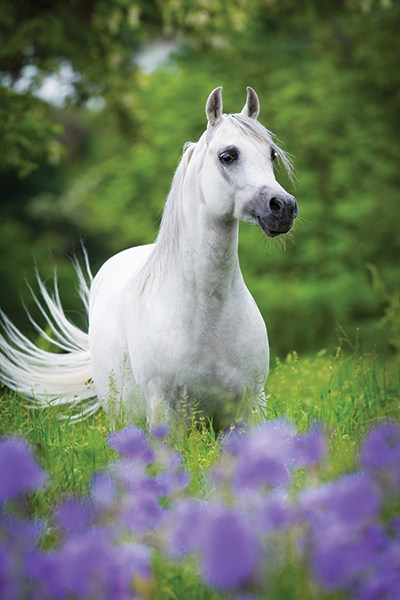
It may seem like only gray and light-colored horses get dirty and stained, when in reality, horses of all colors trap dirt and grime in their coats. However, we can just see it more clearly on light-colored horses. Being able to easily see the dirt during grooming can help us ensure our horses are clean and comfortable. There are three significant components to keeping your horse tidy and bright, especially a gray horse or one with white spots. These include diet, grooming effort, and proper products.
The goal is to have a clean horse with healthy skin and a coat that will repel stains and has a healthy shine. A horse’s natural oil, called sebum, helps with that. Inside the skin, sebaceous glands that are attached to the hair follicle release sebum, which adds shine, provides waterproofing, protects from bacteria and fungus, and repels stains.
The Well-Balanced Diet
Your horse’s skin and coat need nutrition from a forage-based diet. Forage consists of pasture, long-stem hay, and hay products, such as hay cubes, pellets, or chaff.
Your horse also needs balanced vitamins and minerals. Most of these your horse receives from forage, but this depends on the type of forage and where it’s grown. Plants take nutrients from the soil and pass them to your horse. As soil varies widely from region to region, some missing components may need to be supplemented.
Vitamin E and selenium are two examples. Pasture grass has adequate levels of vitamin E, but as pasture is dried to make hay, the vitamin E disappears within a few weeks. Selenium is a mineral in the soil that is necessary for horse health. Certain locations have selenium-deficient soil, such as New England, so any horses on pasture in an area that lacks selenium or those consuming hay made there will need selenium supplementation.
Horses need omega-3 fatty acids for skin and coat health and to produce sebum. While both omega-6s and omega-3s are considered essential fatty acids, and both are needed in the diet, the ratio is important. Omega-3s are anti-inflammatory, while too many omega-6s can increase inflammation. Experts recommend that a horse’s diet should have approximately two to four times the amount of omega-3s than omega-6s, and often, supplementation is necessary.
Omega-3s are abundant in flax, chia seeds, fresh grass, and fish oils. Other fat supplements, such as corn oil, are much higher in omega-6 fatty acids, and consuming these can contribute to whole-body inflammation.
If your horse grazes on fresh grass for part of the year, their supplementation needs will differ from when pasture is unavailable. In colder months, you may need to add vitamins, minerals, and fats.
Your veterinarian and/or an equine nutritionist are excellent resources for nutrition information that applies to your location and your horse’s health.
Elbow Grease and Daily Care
As diet supports your horse’s sebum, you can also spread sebum around. Daily grooming, including vigorous curry combing, helps sebum coat your horse’s hair.
Specialty brushes, like the finishing brush, are excellent for boosting shine. The short and dense bristles help spread the sebum and smooth the coat, creating a polished finish.
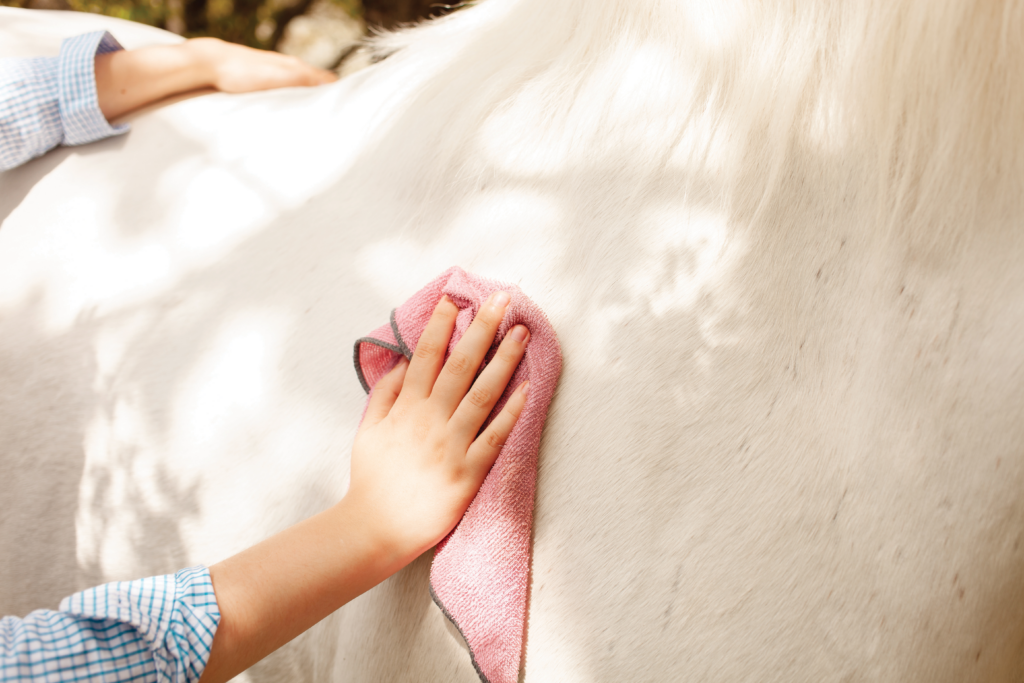
Grooming may remove some stains, but you’ll need help getting everything 100% bright. As you groom, notice any stains on your gray horse or in any white areas of his coat. First, curry and brush the area. Spray any stains or stubborn dirt with a no-rinse shampoo. Allow that to rest in the area for a few minutes. Then, wipe away with a dry or damp cloth.
No-rinse shampoos are also great for lifting that last layer of dust in dry weather. You can spray your horse or dandy brush lightly before brushing one final time.
In cold weather, you can hot towel your horse with a few capfuls of no-rinse shampoo in two gallons of hot water. Drop a cloth into the mixture and use this as a curry comb to shampoo your horse without bathing him.
Bathing and Grooming Light Horses
Now, the fun part! Bathing and grooming with the right horse products works wonders to brighten and whiten grays and white spots on horses if the products are gentle. However, stripping your horse’s skin with harsh detergents removes sebum, which allows stains to settle deeper into the hair.
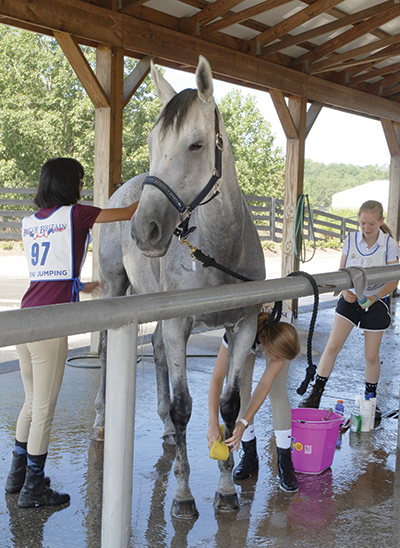
Gentle shine-boosting shampoos are great for bathing, especially if your horse is dirty everywhere. Purple whitening shampoo can transform your horse if necessary and should remain on your horse for 10 minutes before rinsing. If he only has a few dirty spots, you can always use a no-rinse shampoo spray instead.
If your horse’s skin and hair are dull or dry, use a grooming oil after bathing to add nutrients and softness to the coat. You can mix a few capfuls of grooming oil in two gallons of water and sponge that on your horse before sweat-scraping.
In cooler weather, mix the grooming oil with hot water and apply with a few rags or cloths. Wring out the cloth thoroughly; it should be steamy and barely damp. Use that as a curry comb to oil buff your horse. It’s similar to using a no-rinse shampoo to hot towel your horse.
After your horse dries, there are many products that can help protect the hair. Sheen sprays are silicone-based and create a sleek finish and subtle shine. Avoid using them in the saddle area, as your horse may become too slippery to keep the saddle in place.
For a burst of show-ring shine, use a finishing spray to add a polished finish to your horse.
Stain Prevention
Gray and white horses do best with stain prevention. It’s tempting to use products only to clean your horse, but when you focus on skin health through diet and helping your horse’s sebum bloom on the coat with grooming, you have a head start in the clean horse department. Then, products will make your horse even brighter and whiter so that stains never set in, and your horse’s coat will keep his shine and brightness.
It may seem like a challenge to keep a gray horse clean, or to get those white patches bright, but with these tips, you’re one step closer to having a gleaming light-colored horse.
This article was originally published in the 2025 Summer issue of Discover USPC magazine. Read more content from that issue.
About Shapley’s — Official USPC Grooming Product Sponsor
Shapley’s has been producing superior equine grooming products for over 85 years, and top riders and horsemen trust Shapley’s for their horse’s health and shine. Learn more at Shapleys.com

USPC National Office
The United States Pony Clubs, Inc. (USPC or Pony Club) is the largest equestrian educational organization in North America. Started in 1954, the organization has developed curriculum that teaches safe riding skills and the care of horses through mounted and unmounted lessons. Through Pony Club, members have fun with horses and make lifelong friends while they develop skills, habits, and values that extend well beyond the barn and last a lifetime. Many members apply what they have learned in the USPC program successfully in their careers, educational and volunteer opportunities, and other life pursuits.

You May Also Like

Beyond the Bellyache: Your Guide to Colic Prevention

Equine Sedation: A Comprehensive Guide for Horse Owners