Tips for Switch and Catch Riding
By Kari Briggs, Otterbein University Equine Business Manager and Director of Riding, and an “A” Eventing alum of Hunter’s Run Pony Club in the Tri-State Region
Switch riding, which involves riding an unfamiliar horse or pony instead of one’s usual mount, demonstrates a rider’s ability to adapt and highlights their horsemanship skills beyond their own familiar mount. By riding an unfamiliar horse or pony, riders learn to apply their knowledge and aids effectively with an unknown horse while demonstrating their growth beyond their own horse or pony. This skill has been incorporated into the Pony Club curriculum and is part of what is tested at the national level. However, being able to effectively switch ride is not only a Pony Club skill, as it benefits any rider participating in any equestrian sport.
Developing a feel for different types of mounts and learning how to use effective aids in new situations is a fundamental component of becoming a well-rounded horseperson. At its core, riding an unfamiliar mount challenges riders to adapt, communicate clearly, and assess each horse or pony as an individual.
In various equestrian disciplines, switch riding is called “catch riding.” This implies that a rider can use their horsemanship skill set to ride an unfamiliar horse. At its core, switch riding and catch riding are the same thing, although catch riding is often used in reference to a competition or an assessment setting. Both require riders to rely on their foundational skills, their ability to observe and assess a horse quickly, and their capacity to adapt to the horse. We’ll use these terms interchangeably, but keep in mind the subtle distinctions above.
Riders that excel in their switch ride at Pony Club certifications are ones that can quickly establish rhythm and balance with a new mount. These riders are tactful and ride confidently in a strong basic balanced position. As riders progress through the Pony Club levels, the capability of a rider to demonstrate their understanding of the Training Pyramid is further tested in the B and A levels of riding. At the upper levels, riders should be able to apply training principles to improve the horse’s way of going, regardless of whether it is their horse or an unfamiliar one. This includes improving the horse’s balance and responsiveness to the aides.
Improving Your Switch Riding Skills
But how does one get better at switch riding? Where can a Pony Club member find the opportunity to ride other horses? After all, the intent of developing a well-rounded rider is to learn to adapt and ride unfamiliar horses with the same confidence and safety that riders can demonstrate on their own horse.
This is when riders will use a more comprehensive approach to their training and certification preparation. For switch riding, riders should look beyond traditional Pony Club lessons and find unique, diverse, and purposeful training opportunities that are often provided by other equestrian sports, disciplines, and organizations.
Seeking New Catch-Ride Opportunities
Collegiate riders find catch opportunities through the Intercollegiate Dressage Association (IDA), the Intercollegiate Horse Show Association (IHSA), and the National Collegiate Equestrian Association (NCEA). These college-level organizations have led the way in catch-riding competition format and are a valuable addition to a rider’s competitive experiences. The preparation required for these intercollegiate competitions and the opportunity to ride a wide variety of horses help riders develop a deeper and more versatile skill set. Riders learn to think critically, make quick adjustments, and communicate effectively with each horse they ride.
And now, young riders don’t have to wait for college to switch ride during competition. Beginning as young as elementary school, riders can now enjoy competitions in the catch-ride format at an even younger age through the Interscholastic Equestrian Association (IEA). IEA offers hunt seat, dressage, and western riding opportunities to students as young as 9 or 10 years old.
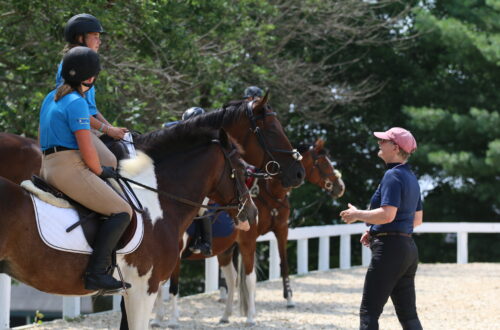
In addition, riders who regularly ride different lesson horses are already practicing many of the skills required for switch riding, and some instructors will make switching mounts during a lesson part of the learning process. While rider may become familiar with the horses over time, regularly adapting to different temperaments, gaits, and training levels requires many of the same skills used in formal switch rides.
In addition, as riders become more experienced, they may decide to compete horses for owners, trainers, or friends on a catch-ride basis, and this is especially common in local, breed, or schooling shows.
Working students, grooms, and assistant trainers are often asked to exercise or school multiple horses, and may involve riding a young horse, an experienced school or show horse, and a horse being rehabbed all in the same week, or even the same day. This experience increases a rider’s adaptability and quick assessment of each mount and their needs.
In the Pony Club world, it is quite common for USPC members to ride borrowed mounts for mounted meetings, rallies, or foxhunts; a certification; or a special opportunity, like an international exchange. While switch rides are a deliberate training exercise, opportunities to ride unfamiliar horses occur throughout the equestrian world.
Why Switch Riding is Important
Regardless of how a rider begins switch riding, they should take the opportunity to recognize the importance of riding a variety of horses. Pony Club members of all ages and levels should begin to think about how each new mount tests their horsemanship.
A strong rider can ride any horse well—not just one, and this is what you should strive for as a rider Use the short checklist below when you get the chance to ride a new mount. Focus on these key elements to become a better switch rider and excel in the switch-ride portion of your next national certification.
- Rider Position: Each new mount will feel different. Maintain a correct, independent position, which includes strong lower legs, a balanced upper body, and quiet hands that follow the horse’s motion.
- Responsiveness to Aids: Riders must adapt their aids to each horse. Remember to use clear, tactful aids. One way to determine how a horse will respond is to make use of transitions beginning at the walk to see how the horse responds. If the horse responds to your aids for the halt and transitions into the walk well, then you can progress to trotting circles and corners to see how they respond to your leg aids in the next gait. This quick assessment will quickly let you know how responsive this mount is to your aids.
- Rhythm and Control: Horses must travel forward freely. Finding rhythm and balance is a key to a good switch ride. It’s important to listen to what the horse is telling you and how he responds to aids and then adjust your aids to develop a rhythm before making further adjustments to affect the horse’s overall balance.
- Appreciate each horse for his own individual qualities. Each mount can teach you something. Take the time to find the positives in each horse, and don’t compare the new horse to your usual mount. Before the ride, observe him and note his temperament to think about how you want to handle the ride, and only change one aid at a time to see the response.
Don’t shy away from catch riding. Find ways to ride additional unfamiliar horses. Each time you develop harmony with an unfamiliar horse, you gain valuable tools that strengthen your horsemanship. Switch riding is truly an art—not because of the challenge itself, but because it encourages riders to broaden and refine their overall riding ability.


You May Also Like

Guidelines for Delay, Cancellation, or Disruption of Events Due to Severe Weather or Natural Disaster
Dear Ema: Getting the A USPC Certification, Getting the Most Out of Pony Club, and Eventing and Dressage Issues