
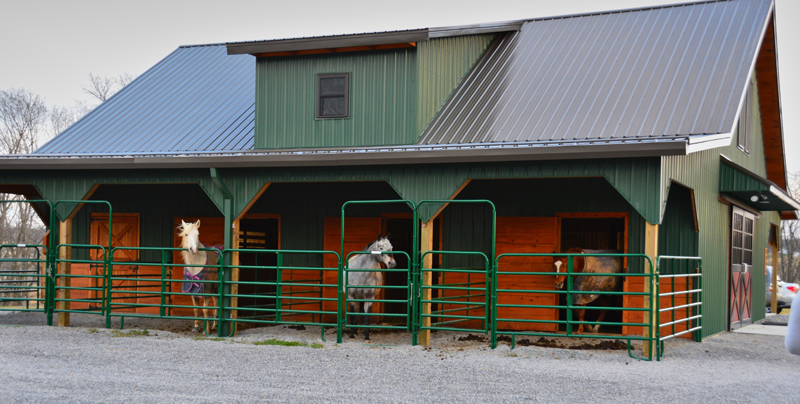
5 Tips to Create More Horse-Friendly Housing for a #HappyHealthyHorse
By Christina Keim, USPC National Examiner
Helping our horses to live their best lives means caring for them in ways that support species-specific behaviors. Some of these behaviors include the ability to move freely at various speeds, to graze on forage throughout the day, to choose where and when to take shelter or to lay down for deep sleep, and the opportunity to interact with compatible equines. Research shows that horses who can demonstrate these behaviors have a lower incidence of diseases like ulcers and colic and fewer stable vices.
Unfortunately, many boarding stables and private facilities don’t have the option of allowing horses to live in large herds while freely grazing on pasture. Additionally, owners may worry that their horse will be injured while playing with another animal or not get enough (or too much) to eat while living with a group.
So when it comes to our horse’s housing, what can we do to help promote a #HappyHealthyHorse?
Here are five tips recommended by experts to help support a horse’s physical, mental, and emotional well-being in their daily environment.
1. Ensure your horse can see, smell, touch, and hear other equines most of the time.
Horses are a social species and are most comfortable when they are able to engage with other equines. Normal horse behavior in a herd includes social grooming, taking turns resting or staying alert, playing, and grazing. Pairing compatible animals and ensuring plenty of space in turnout can help minimize risks associated with overcrowding. But even when horses are stalled, they benefit from being in contact with other compatible horses. One way to do this is to use bars instead of boards between stalls.
2. Provide unrestricted turnout, to the best of your ability.
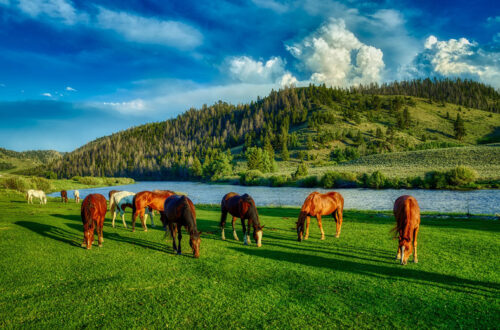
Most research shows that wild horse herds roam anywhere from 10 to 50 miles per day, typically at slow speeds, during which time they also graze, lick salt, drink water, and take naps. Obviously, our domestic horses don’t have to walk that much to get their needs met—but just as with their wild cousins, consistent, steady movement improves their overall health by promoting circulation, tones the musculoskeletal system, and improves the digestive process.
We may think that our horse is better cared for in his stall, but research suggests that outdoor group housing is more beneficial to the well-being of horses over a single box stall. In fact, most of the reasons we keep horses in stalls have to do with either the limited availability of safe turnout or making it easier for humans to care for them. When turnout is not available, it becomes equally important that we find ways to make up for that as much as possible.
3. Use slow feeders and different forage varieties to meet continuous grazing needs.
The equine digestive system functions best when the horse eats small amounts of lower-quality forage frequently throughout the day. But it can be difficult to provide that opportunity to domestic horses, especially those without access to fresh pasture. Additionally, most horses are fed high-quality forages that have been improved to promote good livestock nutrition—which means that for some horses, a little goes a long way.
The good news is that there are a range of slow feeders now available that can significantly increase the time it takes for your horse to ingest his roughage. Slow feeders can be used both in stalls and in turnouts to extend the amount of time it takes your horse to eat. The more bites he takes, the more saliva he produces, which protects his stomach from developing ulcers. It also keeps him busy and mimics the natural process of grazing. If your horse is a super easy keeper, consider stuffing his slow feeder with a lower-quality forage, which will satisfy his need to graze without adding many calories to his diet.
4. Provide shelter appropriate for your region’s climate.
Horses that spend most or all of their time outside still require some type of climate-appropriate shelter. This could be as simple as a thick clump of trees or manufactured sunshade, or as elaborate as a permanent three-sided shed sturdy enough and positioned to block wind and snow. The shelter needs to be large enough to safely accommodate all of the horses in that space and should provide more than one entrance and exit. But don’t be too offended if your horse opts to be outside anyway, even when the weather seems extreme—in fact, research shows that horses adjust their shelter use with the season!
5. Think outside of the box (stall).
As we learn more about the impact a horse’s environment has on his well-being, alternative management systems are emerging. Track systems (a fenced, looped trail along the perimeter of a pasture or property that encourages movement) are one innovation that can offer horses the opportunity to enjoy many normal equine behaviors, even on a smaller acreage. Although this model won’t be the right fit for every farm and every horse, keeping an open mind may help you find a creative way to better meet your horse’s environmental needs.

USPC National Office
The United States Pony Clubs, Inc. (USPC or Pony Club) is the largest equestrian educational organization in North America. Started in 1954, the organization has developed curriculum that teaches safe riding skills and the care of horses through mounted and unmounted lessons. Through Pony Club, members have fun with horses and make lifelong friends while they develop skills, habits, and values that extend well beyond the barn and last a lifetime. Many members apply what they have learned in the USPC program successfully in their careers, educational and volunteer opportunities, and other life pursuits.



2 Comments
E H Renner
This is good information and well presented. How can we encourage influencers online to share this information?
Is there a Help site anywhere specifically for barn managers?
Keep up the good work.!
Sarah Evers Conrad
Happy to hear you enjoyed the article. You are welcome to encourage others to share this information, however, we’re not aware of a specific website for barn managers.