Preparing for Your H-B Certification
By Olivia Arbogast, H-B HM, C-3 EV; Former NYB Representative
Certifications are the attribute of Pony Club that makes our great organization stand out within the horse world. Attaining a national certification, which include the H-B, C-3, B, H-A, and the “A,” has lent credibility and proof of skill to young horse-people for decades. Taking these certifications requires a step up in knowledge and ability from local-level testings, and preparing for a national certification requires dedication. One way to think about the H-B is that someone who has passed the certification would be able to maintain a barn independently for a few days. They must manage and understand nutrition, shoeing, injuries, tack, safety, and more. So where should an H-B candidate begin? As an H-B/C-3, I hope to bring some words of wisdom from my knowledge and from the USPC National Testing Curriculum Committee to help future H-B’s succeed!
First and foremost, use your USPC Manuals of Horsemanship and the USPC Standards of Proficiency. By the H-B, a candidate should be familiar with the content from all three official USPC manuals. The Advanced Horsemanship manual—the big red one—contains much of what you will need. National Examiner Kim Lowman Vollmer recommends that you print off all the material on the USPC website: Standards of Proficiency, the test sheet, checklist, rubrics, and the Resource page items.
Make a binder with tab dividers for each section of the testing: nutrition, conformation, the foot and shoeing, etc. Then go through the Advanced manual and find the information you need for each section and take notes! You can take this binder with you to the veterinarian, to the farrier, to feed stores, and learn on the go. This binder will also help you to know exactly what questions will be asked of you at your testing, and you may even earn a few “Exceeds Standards” for being so well prepared!
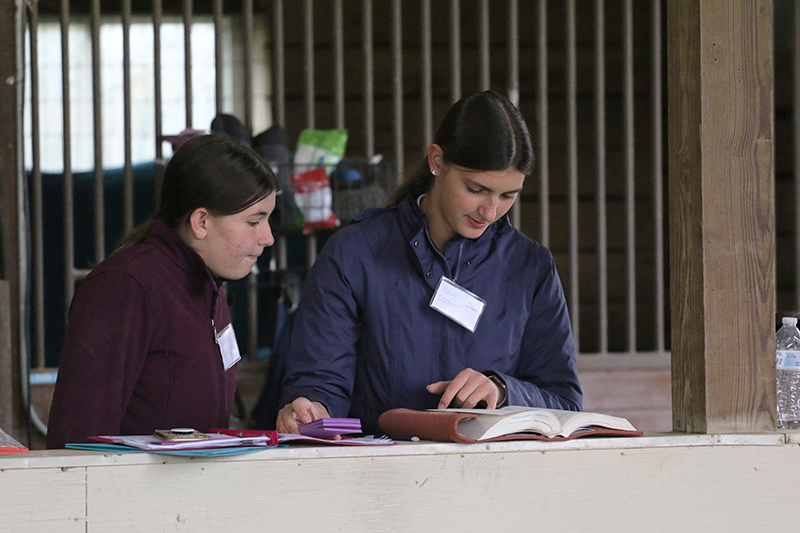
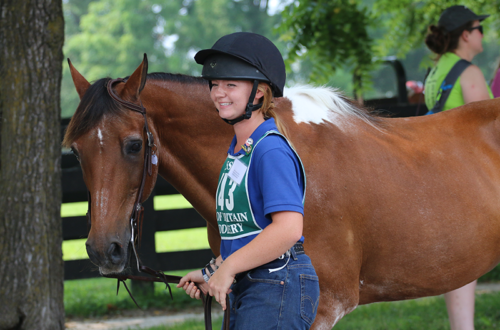
Photo by Elizabeth Moyer/United States Pony Clubs
The next piece of advice is to go beyond the flash cards. The flash cards are intended to guide your study, but looking at an index card cannot show you what timothy hay looks like or explain the difference between an elevator gag bit and an American gag bit. Instead of using the cards as questions, use them to find your knowledge gaps. Then, go look for the information you lack. But how should you do that?
While the H-B is mostly a verbal certification, it relies on functional, practical knowledge of horse management. How better to gain that knowledge than to go to the source? Spend time with your farrier! Ask them to teach you how to pull a shoe; they’ll probably be impressed, and you’ll be ready the next time your horse pulls his loose. Go to your veterinarian and ask them about what local diseases they are on alert for. See if your local agriculture extension department (usually found through a state university) has courses on toxic plants and ask staff for information about your local soil and hay. There is a world of experts available, so make the most of them!
The H-B is a massive undertaking, and while the ideas I gave you might seem pretty overwhelming at first, my final advice to candidates and their support crew is to start early and make a plan. Everything feels easier when it is broken down into sections. If you put the effort in, you will see the results on the other end.
In addition, it’s also recommended by staff and others to attend a prep course and to use the Candidate Readiness Program, which allows you to submit a video of one of your Horse Management skills for feedback from a National Examiner. Finally, I wish all upcoming candidates a hearty, “Good Luck!”

USPC National Office
The United States Pony Clubs, Inc. (USPC or Pony Club) is the largest equestrian educational organization in North America. Started in 1954, the organization has developed curriculum that teaches safe riding skills and the care of horses through mounted and unmounted lessons. Through Pony Club, members have fun with horses and make lifelong friends while they develop skills, habits, and values that extend well beyond the barn and last a lifetime. Many members apply what they have learned in the USPC program successfully in their careers, educational and volunteer opportunities, and other life pursuits.


You May Also Like
Senior Horse Care Dos and Don’ts
How to Change Your Horse’s Nutrition to Suit Workload