10 Tips to Avoid Trail Troubles
By Sarah Evers Conrad, USPC Marketing and Communications Director
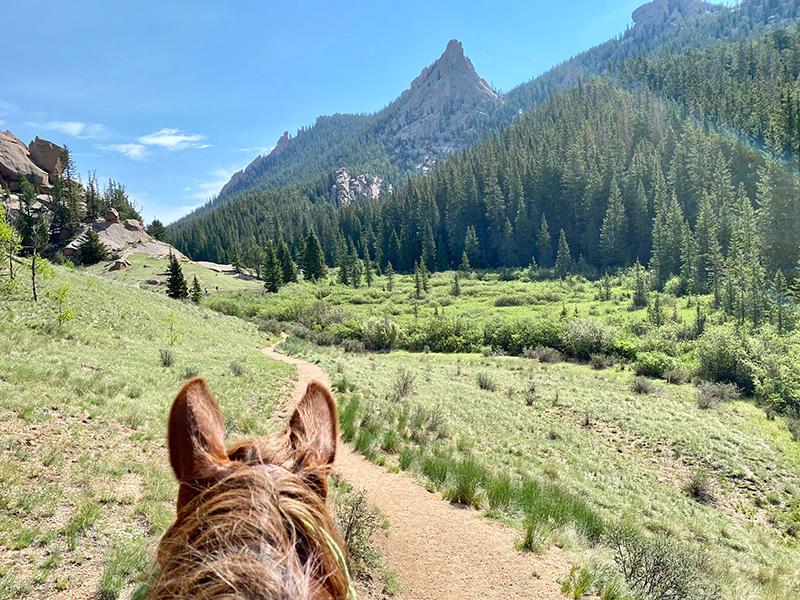
It’s the view that equestrians love…the one between the ears of our horse, especially if it’s a beautiful day with a trail spread out for miles ahead of us. Trail riding is an enjoyable pursuit, but there are safety considerations to keep in mind before, during, and after any trail ride. With proper planning, these 10 tips can help ensure your trail rides are safe and happy ones.
Before You Hit the Trail
1. Plan, prepare, and then pack.
A successful and safe trail ride begins long before your boots are in the stirrups. Start with the who, what, when, why, where, and how of it all.
- Who is going with you? It’s safer to go with a buddy (or several). Has everyone been on a trail ride before? Is there an experienced rider, or two, in the group? For dog lovers, it’s safest to leave your canine buddy at home, unless he’s trained to stay with the group.
- What gear and equipment do you need? What horse will you ride? What kind of fitness and experience level is needed for this particular ride for both horse and rider?
- When are you leaving, and when should you be back? Don’t run out of daylight. Depending on the time of year, it may be best not to go out on certain trails if it’s hunting season in your area.
- Why are you going? Do you have any particular riding goals, or is the ride just for fun? Research the local trail rules and regulations for where you are riding.
- Where are you going? Is it safe? Don’t forget to tell someone where you are going, or you could even let them track your phone (if there is service).
- How will you prepare and communicate in emergencies? What if there is no cell service or your cell battery dies?
2. Ensure you and your horse are ready for a trail ride.
Choose an appropriate horse that is fit and trained. Introduce your horse beforehand to things he might see on the trail, such as bikes, dogs, wildlife, etc. Practice obstacles—logs and water crossings—in a controlled environment at home first.
3. Ask permission before riding on private land.
Plan your route in advance and familiarize yourself with trail conditions. Respect private property so that landowners remain open to equestrians by getting permission to be on their land. Never trespass, litter, trample crops or gardens, or leave damage or messes behind. If you have to go through a closed gate, leave it just as it was before you touched it. Always thank the landowner for the ability to ride on their property.
4. Dress the part.
Always wear a certified, properly fitted riding helmet, boots with a heel, and riding pants or jeans that can protect your legs from the elements. Depending on the season, gloves can protect your hands and be breathable or provide warmth. Layered clothing is important for variable weather, and bright, reflective colors make you visible to others. Look for moisture-wicking base layers, light jackets or vests for warmth, and a waterproof outer layer if there is a chance of rain. A safety vest provides extra protection in case of a fall. Avoid wearing anything loose or dangling that could snag on a tree.
5. Pack your gear.
Consider packing the following in your trail bag:
- Basic first-aid items for horse and rider
- Cell phone (to be kept on your body in case of a fall)
- ID and a medical bracelet, in case of emergency
- Trail map/GPS
- Water and snacks
- Sunscreen
- Bug spray for you/fly spray for your horse
- Extra halter and lead rope
6. Do a pre-ride check.
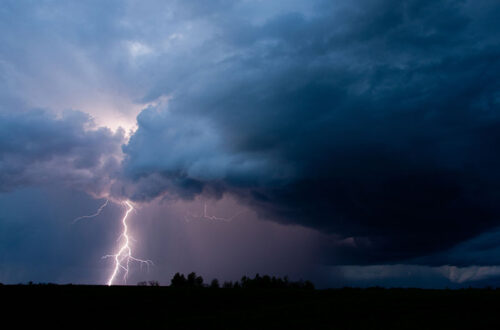
Ensure your horse has safe, properly fitting, and clean tack. Inspect it for any worn leather, loose screws, or damaged straps. Clean his hooves and check horseshoes. Perform an overall body check on your mount. And always check the weather to avoid extreme heat, lightning, or severe storms.
During the Ride
7. Practice trail etiquette and communication.
Many horses will want to do what others are doing. Stick together, with a designated and experienced rider/trail guide in the lead with another at the rear. Never ride off and leave a rider behind. The group should ride at the same pace; if someone wants to change pace, the group should agree and move off together. Don’t just canter off and leave others struggling with their excited horses who want to follow.
It’s best to ride in a line unless a trail is wide enough for side-by-side. Leave at least one horse length between horses, but don’t get too far back, or your horse could panic to catch up. Ask before passing, and be sure not to pass too closely or quickly. Verbally warn riders behind you about holes, branches, wildlife, or other hazards until the warning reaches the last rider. If you have a horse that kicks, tie a red ribbon in his tail. Also, it may seem polite to hold a tree branch out of the way, until it snaps back in the face of the rider behind you.
8. Be polite to those you encounter on the trail.
If you meet hikers or bicyclists, speak to them and politely let them know what to do to safely pass and share the trail. Horses generally have the right of way. Request dog owners leash their dog if it’s not already. When approaching others from behind, call out to alert them.
9. Stay alert and ride with purpose.
Avoid distractions like phones or earbuds. You need to hear what’s going on around you. Pay attention to your horse and the trail. Stay in a balanced position, hold on to your reins, and be ready for surprises, such as wildlife that could spook a horse.
After the Ride
10. Cool down and check your horse over.
Check for any cuts, scrapes, or swelling; rehydrate yourself and your horse; and reflect on what went well and what didn’t.
Safety is Essential
With preparation and awareness, trail riding can be a safe, peaceful experience that deepens your bond with your horse and lets you enjoy nature.
Emergency Situations
Be prepared for emergencies. If you fall off, assess yourself before moving. Keep hold of the reins, if possible. If your horse runs off, stay calm, watch where he goes, follow at a safe distance, and note landmarks so you can find your way back to the trail. Use your phone to contact fellow riders or local authorities, if necessary. Common emergencies can include wounds, bee stings, lost shoes, or getting lost. Research how you should address each situation. If you get lost, stay put. If you can’t use your GPS or map to get back to your trail, call for help.
This article was originally published in the 2025 Summer issue of Discover USPC magazine. Read more content from that issue.

Sarah Evers Conrad
Sarah Evers Conrad is the Marketing and Communications Director for the United States Pony Clubs. She has worked with USPC since 2022. Prior to her tenure at USPC, she was the Digital Content Editor for Horse Illustrated and Young Rider magazines; the E-Communications Director for the United States Equestrian Federation; Managing Editor for USEF's Equestrian magazine, and she began her career on the staff of The Horse magazine. She has also freelanced for numerous equestrian publications and owned her own marketing agency.


You May Also Like

Horsey Halloween Costume Safety Tips

Pony Club Newsletter Notes from the 1980s: A Decade of Development