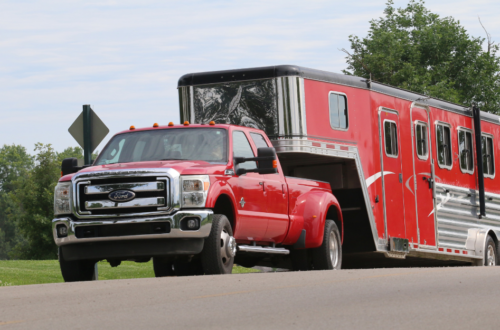

When Disaster Strikes: What Every Horse Owner Must Know
By Rebecca Gimenez Husted, PhD
Disaster scenarios occur all over the world in every imaginable place and situation—and they occur daily depending upon location, climate, geography, and hazards. Our news feeds are filled with them. You can find yourself in unnecessary danger if you are unprepared or stay in the path of an oncoming storm or disaster. Some scenarios—earthquakes, volcanic eruptions, and tornadoes—cannot be easily predicted. However, in many situations, timely evacuation or effective sheltering in place can save the lives of both animals and people. Research has shown that a lack of planning can lead to poor results for animals, as well as people.
With that said, it is possible to save lives simply by taking the time to plan, invest in a few simple logistics, and then share and practice the plan with your family, neighbors, and friends. Performing a practice evacuation and thinking through various possible scenarios can help you gain control in the chaos. For the welfare of our horses, we have an ethical, moral, and a legal responsibility in the case of a disaster that affects our area, and planning ahead gives you the chance to decide what is best for you and your horse.
Plan Ahead
Planning for various hazardous situations is most effective before the actual disaster occurs. Developing a disaster plan makes dealing with the situation smoother, less stressful, and leads to faster recovery, better outcomes, and healthier animals. Typically, people in emotionally charged situations have poor decision-making skills and are easily overwhelmed.
It’s important to know that most communities do not have the resources and personnel to save animals in the first minutes, hours, or even days after a major disaster. Therefore, it is crucial for animal owners and especially those who own, work with, or care for horses, to develop their own plans to protect their valuable animals and facilities.
Resilient owners actually have two plans—one for evacuation during various scenarios, such as wildfire, flooding, or a hurricane, and another for sheltering in place when you can’t evacuate, such as during a blizzard, pandemic, or a tornado, etc.
You’ll want to plan for various scenarios for each situation. For instance, it may seem simple to just move a few horses from your barn to the fairgrounds.
However, that assumption could get you in trouble. For instance, the local environment will NOT be normal once water is flowing or flames are moving, traffic is backed up and snarled on roadways, or the wind changes direction. Every step in your plan will always take longer than you think.
Sometimes, the more obvious questions hit home, such as:
- Do you own a horse trailer?
- Do you know how to hitch it by yourself?
- Are the tires inflated, and does the trailer have working lights and brakes?
- Is your towing vehicle in good working order?
- Is your trailer always accessible?
- Are your horses trained to load quickly and easily?
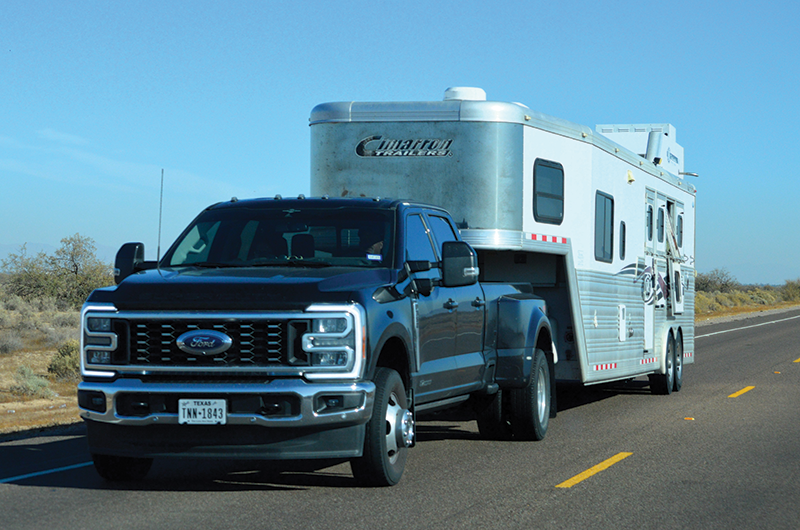
The real heroes in every disaster always go unmentioned. These are the folks that you never hear about or see in the news, because they loaded up their charges and got out of the looming disaster zone before the hurricane or wildfire hit.
Practicing an Evacuation
Get a timer and actually time a practice run for your evacuation plan. How long does it actually take you to hitch up your trailer and load all the horses? If you treat this practice as reality, as though everything you want to save—kids, horses, pets, horse registrations, paperwork, your grandma’s ashes, your wedding photos, etc.—had to be on that trailer to make it out of the disaster zone, it may change your plan, and what is on the list, for your evacuation. In many recent disasters, there has been nothing left for people to come home to, so assume the worst. What would you take? Make your list now and have it readily accessible.
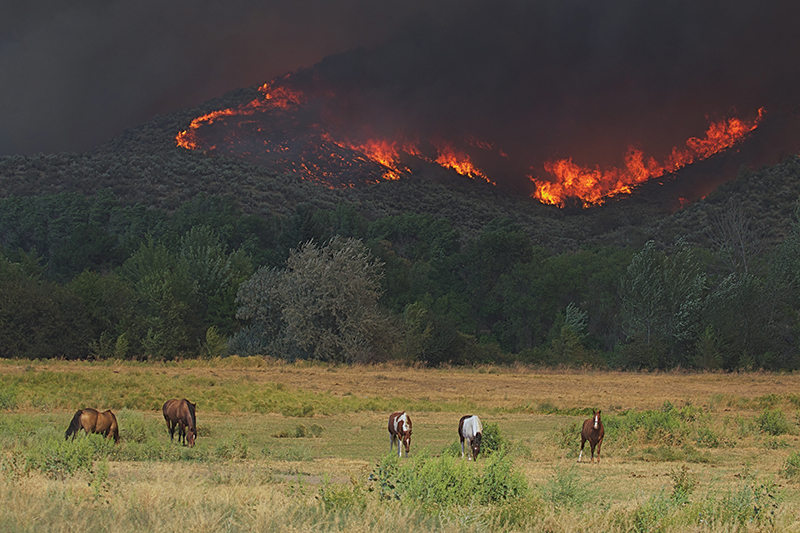
During a disaster, you will need to heed any warnings from officials while paying close attention to news and weather forecasts. Ensure you have the apps on your phone and bookmark any necessary websites to get the best information for your locality (fire, flood, air quality, wind, etc.). In general, the earlier you evacuate, the less chaos and the less stress it will be for you and for your animals due to a hasty departure.
In the event it becomes unsafe to shelter in place or remain at your homestead or barn, don’t be the person that waits too late to leave. For an efficient evacuation, plan ahead and also review past incidents in your area. Have research on hand for possible boarding areas far enough away to be out of danger, and make prior contact with that place in the event you need to evacuate. Establish a relationship with them and think about a reciprocal agreement. Research veterinarians in your area, in case yours isn’t available, and also supply stores, especially ones that carry your feed brand.
Sheltering In Place
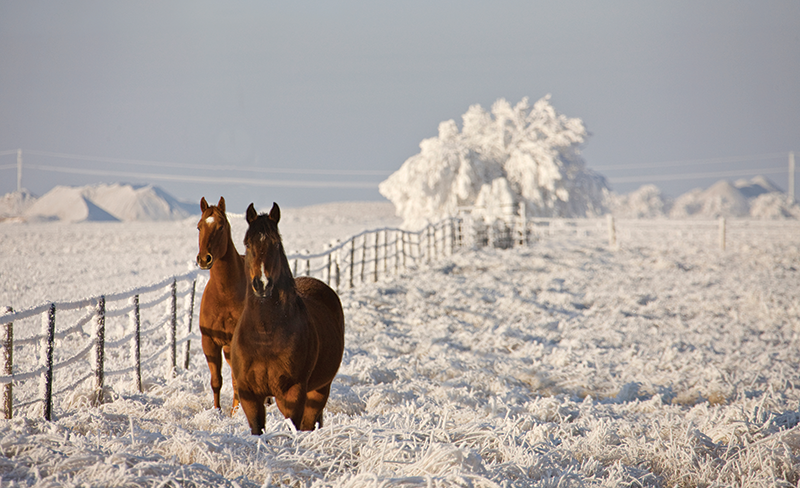
Think about what can go wrong. In a disaster, things change rapidly. We can all remember the COVID-19 pandemic and how interactions and business practices across the globe changed literally overnight. COVID-19 involved a shelter-in-place disaster. Certain types of disasters cannot be evacuated ahead of time—volcanic eruptions, tornadoes, and earthquakes—or evacuation doesn’t make sense, such as during blizzards or an electrical failure. In those cases, a shelter-in-place disaster plan should be enacted, and humans should take priority for care and protection. During disasters, it can be difficult to find everyday resources, such as feed, hay, water, fuel, vet supplies, and veterinary care. Remember the toilet paper crisis during COVID? You’ll need to ensure your horses have anything needed for their care, or develop a plan to share with neighbors and they with you.
Parts Of Your Plan
Here are some things to think about when developing your plan.
- Research for regional and local information. You’ll want to find planned evacuation routes, commonly closed roads, sheltering locations designated by emergency management personnel, etc., and have paper maps of your area in your trailer.
- Ask your local emergency management office about their plans. State, federal, and other organizations are there to assist you, but you have to ask them to do their part to prepare for animals. Otherwise, they usually are only concerned about people.
- Develop a detailed checklist of exactly what to do to close up your property when you leave.
- Create an individual profile sheet for each animal or an evacuation sheet. This is especially helpful in case you end up not being the one who evacuates them.
- Create evacuation kits and first-aid kits for humans and animals and have them ready to go. Get recommendations from an experienced veterinarian to build a kit, including any possible medications that would need to be prescribed, for use in emergency and disaster scenarios.
- Practice trailer loading and plan the priority of animals and procedures for unloading at your designated shelter. Who goes with whom, and who goes first or last if you must make two trips?
- Develop a reunion plan for family and animals. Where do you meet if there is a lack of communication on cell phones and someone gets lost or left behind? What are your alternate ways to communicate, such as radios, apps, leaving physical notes, etc.
- Does your fire or emergency management department have a plan for horses? Examples would include what they would do in case you aren’t home when a wildfire threatens, etc. Do they know how to assist your horses or who they can call to pick up your animals? Where do they evacuate them to if they are evacuating animals? How do they identify them so that you can prove ownership? Do your horses have a form of identification, like a freeze brand, lip tattoo, or microchip?
- Ensure you have extra copies of insurance, registration, wills, power of attorney, Coggins tests, health certificates, proof of ownership, and other relevant documents for animal care and identification. You can also have all copies on a digital drive.
- In addition, evaluate your horse property on the following websites for flooding risks to determine the chance of flooding and when would you need to consider evacuating. These sites are also useful when purchasing horse properties:
- Lastly, consider your recovery plan. Will you send someone ahead to evaluate any affected property before bringing animals home after a disaster? This is usually recommended. Is it safe from fallen/sharp objects, downed power lines, downed fences, destroyed buildings, gas leaks, or contaminated water? Recovery may take hard physical labor, time, and resources, including the need to hire heavy equipment to clear large objects or fallen trees and to rebuild fences. You don’t want to come home with horses and leave them tied to the horse trailer while you do these chores for a couple days.
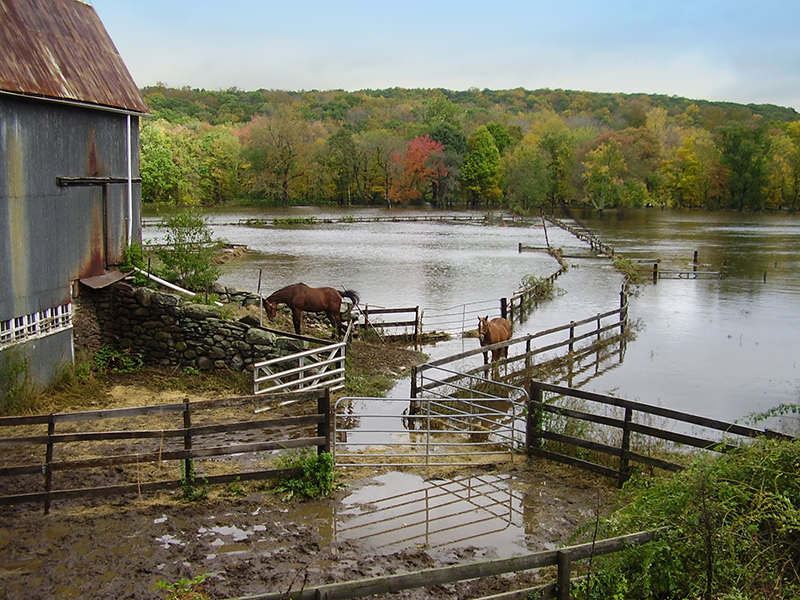
Preparation has been shown to be the key to survival and recovery in many animal emergencies and disasters, both large scale and small. Decide your plan ahead of time; communicate your plan to others, including your local jurisdiction emergency management director; practice to see if it works for you; and write out your checklist for both evacuation and for shelter in place. That way, all you need to do is an annual review of your plan. After all, while life has a way of throwing curve balls, we can plan ahead to keep ourselves and our horses as safe, happy, and healthy as possible.
This article was originally published in the Summer 2025 issue of Discover USPC magazine. Read more content from that issue.

USPC National Office
The United States Pony Clubs, Inc. (USPC or Pony Club) is the largest equestrian educational organization in North America. Started in 1954, the organization has developed curriculum that teaches safe riding skills and the care of horses through mounted and unmounted lessons. Through Pony Club, members have fun with horses and make lifelong friends while they develop skills, habits, and values that extend well beyond the barn and last a lifetime. Many members apply what they have learned in the USPC program successfully in their careers, educational and volunteer opportunities, and other life pursuits.


You May Also Like
Show-Stopping Biosecurity: A Horse Show Veterinarian’s Personal Experiences
Adding Enrichment to your Horse’s Life